
Grace Nichols Wins 2026 RSL Pioneer Prize for Her Contribution to Caribbean Poetry
November 3, 2026 | United Kingdom | Literary News
Guyana-born British poet Grace Nichols has been named the winner of the 2026 Royal Society of Literature (RSL) Pioneer Prize, receiving £10,000 in recognition of her influential contribution to poetry and her role in expanding the representation of women and Caribbean voices in British literature.
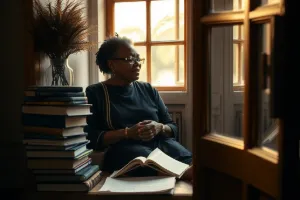
Now 76, Nichols has spent decades developing a distinctive poetic style that brings together Caribbean oral traditions, Guyanese folklore, cultural identity, and historical memory. Her writing explores the experiences of women, the legacy of colonialism and slavery, racial identity, and the complexities of belonging to more than one cultural world.
Among her best-known collections are I Is a Long-Memoried Woman (1983) and The Fat Black Woman's Poems (1984), two works that helped establish her reputation as an important voice in contemporary Caribbean and British poetry.
The award recognizes not only Nichols's literary achievements but also the barriers she overcame as a woman writer whose cultural background and experiences were not always fully represented in the British literary establishment.
From Guyana to Britain: The Cultural Roots of a Poet
Grace Nichols was born in Georgetown, Guyana, in 1950 and grew up in a coastal village before moving to the capital with her family as a child.
Her early experiences of Guyanese life, including local storytelling, music, folklore, and the natural landscape, became important influences on her poetry.
Before moving to Britain in 1977, Nichols worked as a teacher and journalist in Guyana. Her relocation brought her into a different cultural and literary environment, but she continued to draw inspiration from her Caribbean background.
Rather than abandoning the language and traditions of her childhood, she incorporated them into her writing, creating poetry that moves naturally between Caribbean Creole expressions and standard English.
This combination became one of the defining characteristics of her literary voice.
Her poems often reflect the experiences of Caribbean communities living between different cultures, examining the relationship between homeland, migration, identity, and belonging.
For Nichols, cultural memory is not simply a record of the past. It is something carried through language, family stories, music, and everyday experiences.
I Is a Long-Memoried Woman: Recovering Women's History Through Poetry
Published in 1983, I Is a Long-Memoried Woman was Nichols's first major poetry collection and won the Commonwealth Poetry Prize in the same year.
The collection explores the experiences of African women throughout the history of slavery, tracing themes of displacement, suffering, survival, and cultural continuity.
Through a series of interconnected poems, Nichols gives voice to women whose experiences were frequently overlooked in traditional historical narratives.
The work draws on historical memory and the collective experiences of generations of women, presenting identity as something shaped by both personal experience and inherited history.
Its importance lies partly in its approach to historical storytelling. Instead of presenting the past through conventional historical accounts, Nichols uses poetry to explore the emotional and human dimensions of experiences that official records often fail to capture.
The collection established her reputation as a poet capable of combining historical consciousness with a distinctive female perspective.
The Fat Black Woman's Poems: Identity, Humor, and Female Confidence
Another major work, The Fat Black Woman's Poems, published in 1984, explores race, gender, body image, beauty standards, and the experiences of Black women.
The collection centers on a memorable female voice that challenges conventional ideas about beauty and femininity.
Through humor, irony, Caribbean expressions, and vivid imagery, Nichols presents a woman who refuses to conform to the expectations imposed by society.
The poems examine everyday experiences, relationships, cultural differences, and the pressures placed on women to fit particular physical and social ideals.
Rather than approaching these subjects only through confrontation, Nichols frequently uses wit and playful language to question established attitudes.
The result is a collection that celebrates female identity while challenging the cultural assumptions surrounding race, appearance, and belonging.
Together, I Is a Long-Memoried Woman and The Fat Black Woman's Poems demonstrate two important dimensions of Nichols's writing: the recovery of historical experiences and the celebration of contemporary female identity.
Caribbean Oral Traditions and the Power of Language
One of the most distinctive features of Nichols's poetry is her use of Caribbean oral traditions.
Her writing frequently incorporates rhythms, storytelling techniques, expressions, and cultural references associated with Guyanese and wider Caribbean communities.
This approach allows her poems to retain something of the sound and movement of spoken language.
The relationship between oral storytelling and written poetry is particularly important in Caribbean literature, where cultural memory has often been preserved through songs, folktales, family histories, and community traditions.
Nichols brings these traditions into contemporary English-language poetry without treating them as separate or secondary forms of expression.
Her language moves between different registers, combining Creole and standard English in ways that reflect the complexity of Caribbean cultural identity.
Her work also addresses the historical relationship between the Caribbean and Britain, particularly the continuing influence of colonialism, migration, and racial inequality.
Through these themes, Nichols has helped create a literary space in which Caribbean experiences can be expressed on their own terms.
The RSL Pioneer Prize: Recognizing Women Who Changed Literature
Established in 2025 by the Royal Society of Literature, the Pioneer Prize recognizes British women writers aged 60 and over who made significant contributions to literature during periods when opportunities for women were more limited.
The prize was founded through the initiative of writer Bernardine Evaristo, who donated her £100,000 Women’s Prize Outstanding Contribution Award to establish the initiative over a ten-year period.
Each annual winner receives £10,000, with the award focusing on a different literary form or genre in different years.
The inaugural 2025 prize was awarded to writer Maureen Duffy. The 2026 edition focuses on poetry, with Nichols selected for her pioneering influence and lasting contribution to the literary landscape.
The award also encourages winners to recognize overlooked women writers who inspired them and highlight emerging female literary voices.
For Nichols, the recognition represents an acknowledgment of a career that has helped connect Caribbean literary traditions with contemporary British poetry.
She has also received other major honors, including the Queen's Gold Medal for Poetry in 2021.
A Continuing Legacy in Contemporary Poetry
Beyond her adult poetry collections, Grace Nichols has written novels and numerous books for children, extending her interest in storytelling and language to younger readers.
Her work has also become part of the British school curriculum, introducing generations of students to Caribbean culture, poetry, and different perspectives on identity.
Her influence can be seen in the wider recognition of diaspora writing and the growing presence of diverse cultural voices in contemporary British literature.
Nichols's next adult poetry collection, The Tracks of My Name, is scheduled for publication on November 19, 2026, providing another opportunity for readers to explore her evolving literary interests.
Her 2026 Pioneer Prize is therefore more than recognition of a distinguished career. It also highlights the importance of preserving cultural traditions, expanding literary representation, and recognizing writers whose contributions have helped reshape the way poetry is written and understood.
From Guyana to Britain, Nichols has built a literary voice that connects generations, cultures, and histories. Her poetry demonstrates how language can preserve collective memory while giving individuals the freedom to define their own identities.