
Harriet the Spy to Become a Full-Color Graphic Novel for a New Generation of Readers
United States | November 6, 2026
More than six decades after its original publication, Harriet the Spy, the beloved children's novel by Louise Fitzhugh, is getting a new visual interpretation. Penguin Random House's children's publishing division has announced the first official graphic novel adaptation of the classic, bringing Harriet M. Welsch's world of secret observations, notebooks and childhood adventures to life in full color.
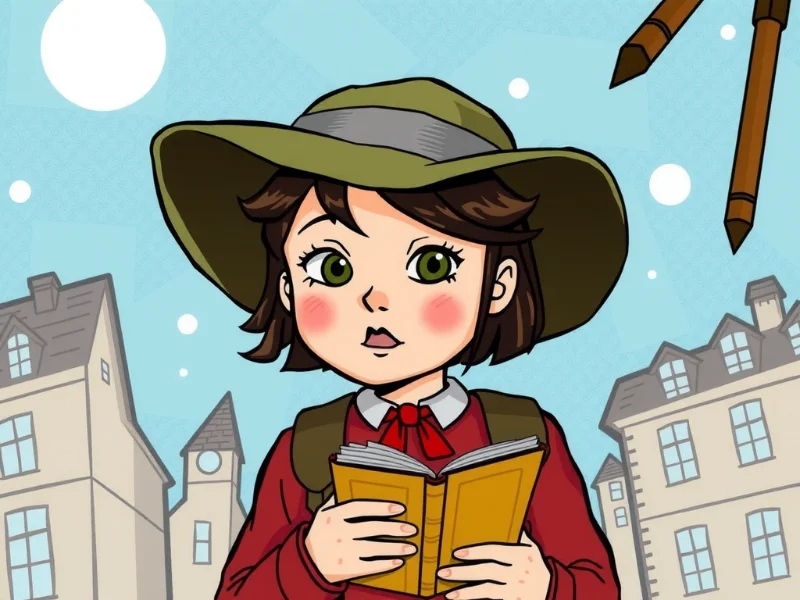
Titled Harriet the Spy: The Graphic Novel, the new edition will be adapted by Harriet Webster and illustrated by Claudia Petrazzi. Published under Delacorte Press, an imprint of Random House Children's Books, the 256-page book is scheduled to arrive on April 27, 2027.
The adaptation is designed for readers aged 8 to 12, introducing one of children's literature's most memorable young characters to a new generation while giving longtime fans another way to revisit the story.
A Girl Who Wants to Observe Everything
First published in 1964, Harriet the Spy follows eleven-year-old Harriet M. Welsch, a New York City girl who dreams of becoming a spy and, eventually, a writer.
Encouraged by her nanny, Ole Golly, Harriet develops the habit of observing the people around her and recording everything she notices in a private notebook. Her entries include candid descriptions of classmates, neighbors, friends and even the adults in her life.
Harriet believes that being a good observer means telling the truth, no matter how uncomfortable it may be. But her carefully guarded notebook eventually goes missing and falls into the hands of the very people she has been writing about.
When her friends discover what she has said about them, Harriet faces the consequences of her honesty. The experience forces her to reconsider friendship, trust, privacy and the difference between observing people and understanding them.
Rather than presenting childhood as an uncomplicated period of innocence, Fitzhugh created a protagonist who is outspoken, curious, sometimes insensitive and unmistakably human. That complexity helped make Harriet a distinctive figure in children's literature.
A New Visual Life for a Literary Classic
The upcoming graphic novel adaptation is written by Harriet Webster, with artwork by Italian illustrator Claudia Petrazzi.
The graphic format offers a different way to experience Harriet's story. Her notebook entries, observations of New York life and encounters with classmates can be translated into visual scenes, allowing readers to follow both the events and Harriet's perspective more directly.
For younger readers who are familiar with graphic novels, this format may provide an accessible entry point into a classic first published in the 1960s. At the same time, the adaptation faces an important creative challenge: preserving the sharp voice, humor and emotional honesty that made Fitzhugh's original work distinctive.
The publisher describes the new edition as a contemporary middle-grade graphic novel combining humor, difficult truths and the excitement of spying.
The book is also listed as part of The Harriet Graphic Novels, suggesting a broader graphic-novel publishing direction for the character.
Why Harriet's Story Still Matters
One reason Harriet the Spy has remained relevant is that its central conflict feels familiar across generations.
Children still struggle with friendship, social expectations and the desire to express their honest thoughts. Harriet's notebook represents the freedom of private writing, but its accidental exposure raises questions about boundaries and the responsibility that comes with recording other people's lives.
The novel also offers an early portrait of a girl who wants to become a writer on her own terms. Harriet is not defined by being agreeable or perfect. She is encouraged to observe, question and develop her own voice, even when doing so leads to difficult consequences.
That combination of independence, curiosity and emotional growth gives the story a continuing appeal beyond its original historical setting.
From the Printed Page to Screen and Graphic Novel
The graphic novel is not the first adaptation of Fitzhugh's work. Harriet the Spy has previously inspired a 1996 feature film and a 2021 animated series for Apple TV+.
The 2027 edition, however, marks a new chapter in the book's publishing history. Instead of translating the story for film or television, it returns Harriet to the printed page through a format that combines illustration and written narrative.
For publishers, adapting established children's classics into graphic novels is also a way to connect familiar stories with changing reading habits. A successful adaptation can introduce a book to readers who might not otherwise pick up its original edition, while encouraging others to explore the source text.
More than 60 years after Louise Fitzhugh introduced her observant young heroine, Harriet is preparing to open her notebook again — this time in full color.
Harriet the Spy: The Graphic Novel is scheduled for publication on April 27, 2027, from Delacorte Press.