
World Caribbean Books Expands Global Distribution, Bringing Caribbean Literature to Readers in 190 Countries
The Bahamas and the Caribbean | November 5, 2026
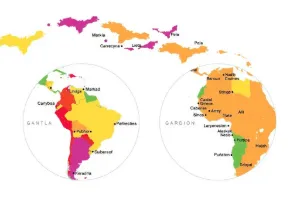
Caribbean literature is seeking a wider place in the global book market. World Caribbean Books (WCB), a Caribbean-owned publishing and retail platform based in The Bahamas, is expanding its international distribution network with the goal of bringing books from across the region to readers in more than 190 countries.
The initiative aims to connect authors, publishers and cultural organisations from The Bahamas, Jamaica, Barbados, Belize and other Caribbean territories with international readers through publishing services, wholesale supply, retail channels and global book distribution.
The plan has received support from Cevin Bryerman, CEO of Publishers Weekly, one of the publishing industry's best-known trade publications. Bryerman described the initiative as an important opportunity to make Caribbean publishing more visible in the international marketplace.
On November 6, Bryerman is scheduled to join Albert Cox, CEO and Publisher of World Caribbean Books, for an online discussion titled Opening the Caribbean to the Global Book Industry. The free webinar will explore how regional authors, publishers and institutions can gain greater access to international publishing and distribution opportunities.
Giving Caribbean Stories a Global Platform
The Caribbean has a rich and diverse literary tradition, shaped by its history, languages, migration, cultural exchanges and complex social identities.
Writers from the region have explored subjects ranging from colonial history and independence to migration, family relationships, race, identity and the experience of belonging to multiple cultures.
Yet many Caribbean authors and independent publishers face practical obstacles when trying to reach readers overseas. Limited distribution infrastructure, high shipping costs, fragmented retail networks and restricted access to international publishing services can make it difficult for books to travel beyond their original markets.
World Caribbean Books is seeking to address these challenges by building a distribution and retail network that connects regional titles with international markets.
Its online bookstore organises Caribbean books by country and territory, including The Bahamas, Jamaica, Barbados, Belize, Grenada, Guyana, Saint Lucia, Suriname and other parts of the region. It also features works connected to French- and Spanish-speaking Caribbean communities.
The platform aims to make it easier for readers to discover books through their cultural and geographical connections, while giving regional authors another route to reach audiences abroad.
Beyond Book Distribution: Building a Publishing Ecosystem
World Caribbean Books describes its business as more than an online bookstore. Its services combine publishing, wholesale supply, retail, marketing and international distribution.
The company also works with institutions and organisations to develop research, historical records and cultural materials into books. This approach could create opportunities for universities, libraries, researchers and cultural organisations seeking to preserve and share Caribbean knowledge.
Its publishing model includes revenue-sharing arrangements with publishing partners, allowing the company and participating creators or organisations to benefit from the commercial distribution of their work.
For independent authors, access to such infrastructure can be important. Writing a book is only one part of publishing: authors also need editing, production, marketing, sales channels and a reliable way to deliver books to readers.
A connected publishing and distribution network could help reduce some of the barriers facing writers who do not have access to large international publishing houses.
However, global reach does not automatically guarantee international sales. Discoverability, translation, pricing, local demand and the availability of books in individual markets will remain important factors in determining whether Caribbean titles can build lasting readerships overseas.
A Region Seeking Stronger Publishing Infrastructure
World Caribbean Books is not the only organisation working to strengthen the Caribbean publishing industry.
In July 2026, Publishers Weekly reported on the establishment of the Caribbean Collective, an organisation representing publishers from eight English-speaking Caribbean islands. Its aim is to improve the region's publishing infrastructure and help local writers gain access to international industry networks without having to leave the Caribbean to pursue opportunities abroad.
The two initiatives reflect a broader effort to build a more connected regional publishing ecosystem.
For decades, Caribbean literature has reached international audiences through writers such as Jamaica Kincaid, Derek Walcott, V. S. Naipaul and Edwidge Danticat. Their work has helped introduce Caribbean histories, landscapes and cultural experiences to readers around the world.
Contemporary writers continue to expand that literary landscape, exploring new perspectives on identity, migration, gender, history and life across the Caribbean diaspora.
A stronger regional publishing infrastructure could help more voices enter this conversation, including emerging writers and independent authors whose work may not yet have attracted attention from major international publishers.
The Role of the Caribbean Diaspora
The potential audience for Caribbean books extends far beyond the region itself.
Millions of people with Caribbean backgrounds live in North America, Europe and other parts of the world. For many, books offer a way to maintain connections with family histories, languages, cultural traditions and the places their communities came from.
The diaspora also represents an important potential readership for contemporary Caribbean fiction, poetry, history, biographies and children's literature.
A more accessible international distribution network could help connect these readers with authors and publishers in their countries of origin. It may also introduce Caribbean literature to readers who have not previously explored the region's literary traditions.
For publishers, the opportunity is not simply to export books, but to build lasting relationships with readers across different markets.
Opening the Caribbean to the Global Book Industry
The November 6 webinar, featuring Albert Cox and Cevin Bryerman, is expected to examine how Caribbean publishers and authors can participate more effectively in the global book industry.
The discussion comes at a time when digital retail, international distribution services and print-on-demand technologies are creating new possibilities for independent publishing.
For Caribbean writers, the challenge is no longer only how to produce a book. It is also how to make that book discoverable, affordable and available to readers around the world.
World Caribbean Books' initiative represents one attempt to address that challenge by connecting regional literary production with international publishing infrastructure.
If successful, the effort could help more Caribbean stories travel beyond their home markets — giving independent authors greater opportunities to find readers while bringing the region's history, creativity and cultural diversity into the wider global literary conversation.